
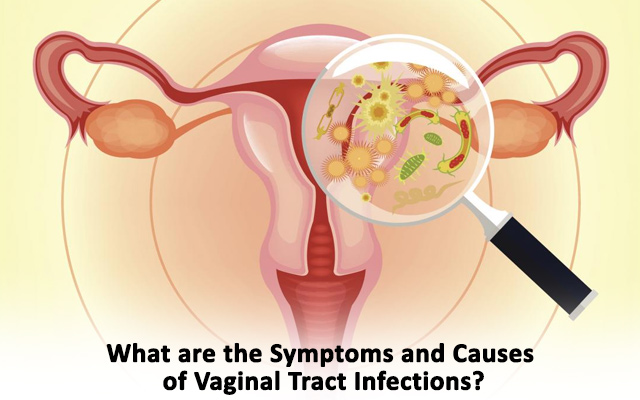
Vaginal infections affect most women at least once in their lifetime. They’re uncomfortable, but very treatable once you know the warning signs.
This guide breaks down the symptoms, causes, and prevention tips for vaginal tract infections (VTIs) — so you know exactly when to see a gynaecologist.
How Common Are Vaginal Infections?
Vaginal infections are far more common than most women realize.
| Statistic | Data | Source |
|---|---|---|
| Women affected by yeast infections at least once | 75% | Wikipedia / clinical literature |
| Women with BV who reported no symptoms | 84% | CDC |
What Are the Symptoms of a Vaginal Infection?
Most infections show up as one or more of these signs:
- Abnormal discharge — thick, cheesy, or grey/yellow/green in color, sometimes with a strong odor
- Itching or irritation around the vaginal area
- Burning sensation, especially during urination
- Pain during sex or general discomfort during intercourse
- Redness or swelling of the vaginal area
- Pelvic pain, particularly in more advanced infections
If you notice any of these, it’s worth getting checked rather than waiting it out.
Vaginal Discharge Color Chart: What Does It Mean?
Discharge color is one of the most-searched symptoms. Here’s a quick reference:
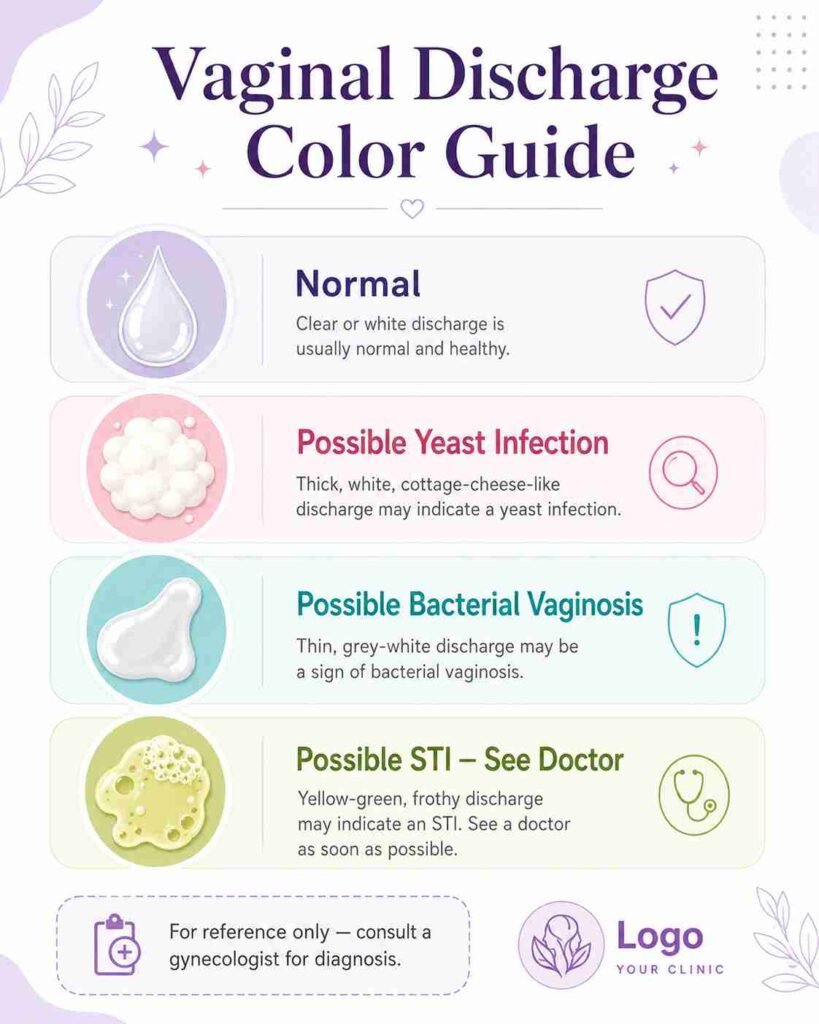
| Discharge Color | Possible Cause |
|---|---|
| Clear or white, thin | Usually normal |
| Thick, white, cottage-cheese-like | Yeast infection |
| Grey or white, thin, fishy odor | Bacterial vaginosis |
| Yellow or green, frothy | Trichomoniasis (STI) |
| Any color with strong odor + itching | Needs medical evaluation |
This chart is for reference only — a proper diagnosis needs a clinical exam.
What Causes Vaginal Infections?
Vaginal infections happen when the natural balance of bacteria and fungi in the vagina gets disrupted. Common causes include:
- Bacterial Vaginosis (BV) — the most common cause; overgrowth of harmful bacteria replaces the protective ones
- Yeast Infections — overgrowth of Candida fungus, often triggered by antibiotics, high sugar levels, or hormonal shifts
- Sexually Transmitted Infections (STIs) — chlamydia, gonorrhea, or trichomoniasis can mimic infection symptoms
- Poor hygiene or over-washing — both extremes disturb the natural vaginal flora
- Hormonal changes — pregnancy, menstruation, and menopause all shift the vaginal environment
- Diabetes — uncontrolled blood sugar promotes Candida growth
- Antibiotic use — kills protective bacteria along with harmful ones, allowing yeast to grow
Bacterial Vaginosis vs Yeast Infection vs STI: What’s the Difference?
This is one of the most-searched comparisons, so here’s a side-by-side:
| Feature | Bacterial Vaginosis | Yeast Infection | STI (e.g. Trichomoniasis) |
|---|---|---|---|
| Discharge | Grey/white, thin | Thick, white, clumpy | Yellow/green, frothy |
| Odor | Fishy, worse after sex | Usually mild/none | Strong, unpleasant |
| Itching | Mild | Often intense | Moderate |
| Cause | Bacterial imbalance | Candida overgrowth | Sexual transmission |
| Is it an STI? | No | No | Yes |
For a deeper dive specifically on BV, read: Bacterial Vaginosis: Why You Shouldn’t Wait to Treat It
How to Prevent Vaginal Infections? (Hygiene Tips)
Simple daily habits go a long way in preventing recurring infections:
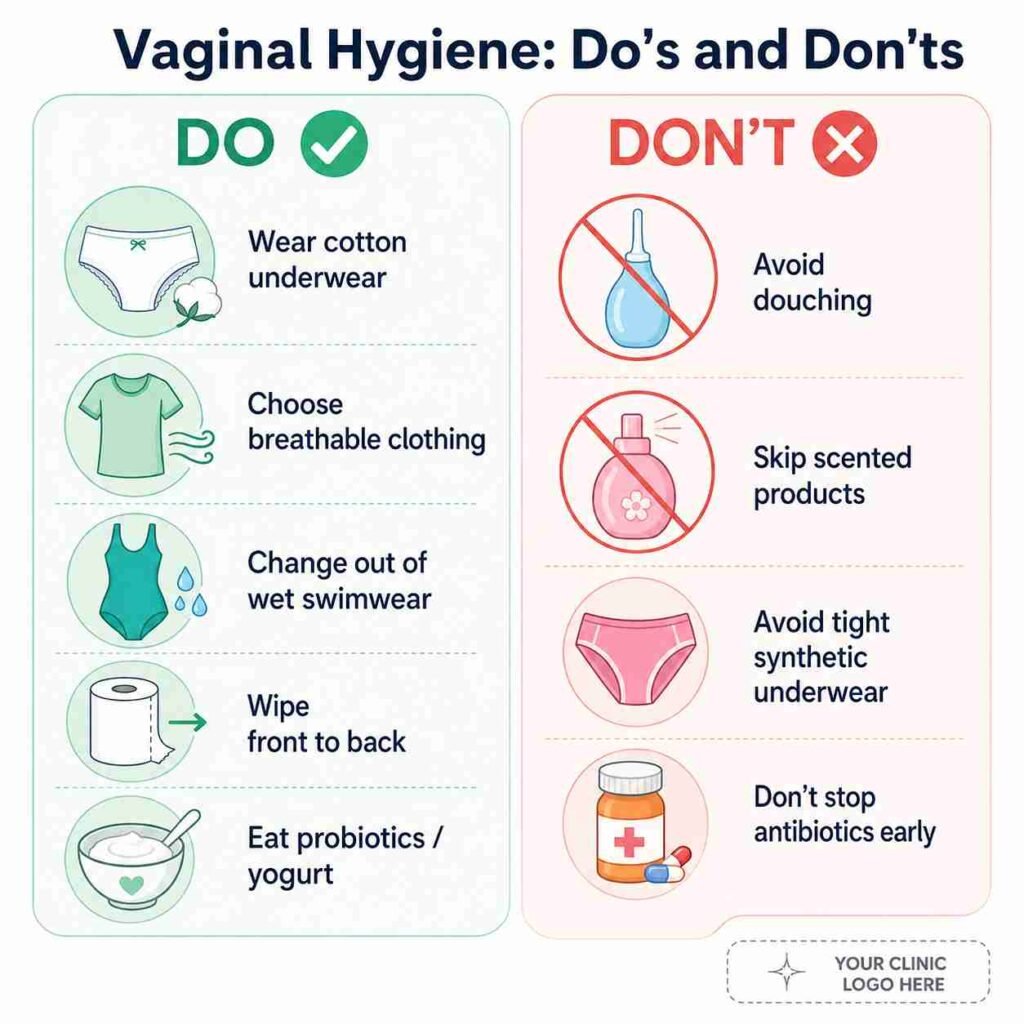
- Wear breathable, cotton underwear instead of synthetic fabrics
- Avoid douching — it disrupts natural vaginal bacteria
- Wipe front to back after using the washroom
- Change out of wet swimwear or sweaty clothes promptly
- Avoid scented soaps, sprays, or wipes in the vaginal area
- Keep blood sugar in check if you have diabetes
- Don’t skip your antibiotic course, but ask your doctor about probiotics alongside it
When Should You See a Gynecologist?
See a doctor promptly if you notice:
- Discharge that’s unusual in color, texture, or smell
- Persistent itching or burning that doesn’t improve
- Pain during sex or urination
- Symptoms that return repeatedly (recurring infections)
Left untreated, some vaginal infections can lead to complications, so early diagnosis matters.
Conclusion
Vaginal infections are common, uncomfortable, and very manageable with the right care. Watching for symptoms like unusual discharge, itching, or pain — and knowing what triggers them — helps you act early.
If you’re experiencing any of these symptoms, consult Dr. Smita Jadhav gynecologist in Salt Lake, Kolkata, for proper diagnosis and treatment.
FAQs on Vaginal Infections
1. Is a vaginal infection the same as an STI?
No. Many vaginal infections, like BV and yeast infections, aren’t sexually transmitted — but some symptoms overlap with STIs.
2. Can vaginal infections go away on their own?
Some mild cases may resolve, but most need proper treatment to fully clear and avoid recurrence.
3. Are vaginal infections a sign of poor hygiene?
Not necessarily. Over-washing can cause infections just as much as under-washing.
4. Can vaginal infections affect fertility or pregnancy?
Untreated infections, especially during pregnancy, can lead to complications — early treatment is important.
5. How do I know if it’s a yeast infection or bacterial vaginosis?
The clearest way is a clinical exam, since discharge color and odor can overlap. Use the comparison table above as a starting guide.