
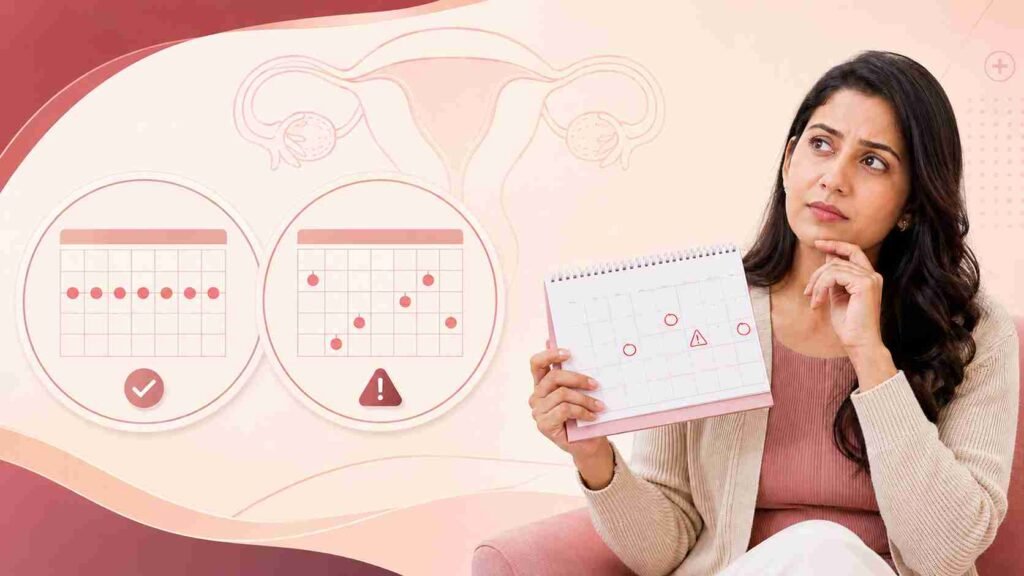
Periods don’t always arrive on the same date or follow the same pattern. A few days of variation can be normal. Flow and discomfort may also change occasionally because of stress, illness, travel or lifestyle changes.
However, frequent delays, unusually heavy bleeding, prolonged periods or severe pain should not be dismissed. These changes may indicate abnormal menstrual bleeding or an underlying health condition requiring evaluation.
Understanding your usual pattern is the first step towards recognising when something is wrong.
What Is a “Normal” Menstrual Cycle?
The menstrual cycle begins on the first day of the period. It ends the day before the next period begins. The normal range for menstrual cycle length is generally between 21 and 35 days for adults. A cycle lasting around 28 days is common, but it is not the only healthy pattern.
Bleeding usually continues for two to seven days. Flow may be heavier during the first two days, then gradually decrease. Mild cramps, fatigue, breast tenderness or mood changes may occur.
What matters most is consistency. A 25-day cycle may be normal for one woman, while another regularly has a 32-day cycle. Changes become more significant when they repeatedly differ from your usual pattern or interfere with daily life.
Signs Your Periods May Be Abnormal
One unusual period does not necessarily indicate a medical condition. However, repeated or sudden changes deserve attention.

Cycles Shorter Than 21 Days or Longer Than 35 Days
Periods arriving more frequently than every 21 days may lead to excessive blood loss over time. Cycles consistently longer than 35 days can suggest irregular or absent ovulation.
Common irregular period causes include stress, significant weight changes, PCOS, thyroid disorders, perimenopause and certain medicines. Recently starting or stopping hormonal contraception can also temporarily affect timing.
Track the first day of each period for several months. This makes it easier to identify a persistent pattern rather than relying on memory.
Bleeding That Lasts More Than Seven Days
A period continuing beyond seven days is considered prolonged. Even moderate bleeding can become concerning when it continues for many days.
Prolonged periods may be connected with hormonal changes, uterine fibroids, polyps, adenomyosis or blood-clotting disorders. Medical evaluation is particularly important if prolonged bleeding happens repeatedly or causes tiredness and weakness.
Very Heavy Flow
Recognisable heavy periods symptoms include:
- Soaking through a pad or tampon every one to two hours
- Using two menstrual products simultaneously
- Waking repeatedly at night to change pads
- Passing clots larger than usual
- Bleeding through clothing or bedding
- Avoiding work, exercise or travel because of bleeding
Seek urgent medical advice if you are soaking through a pad every hour for several consecutive hours. This is especially important if you feel dizzy, faint, breathless, or unusually weak.
Severe Pain That Disrupts Daily Life
Mild cramps during the first day or two can be expected. Pain is more concerning when it prevents you from walking, sleeping, attending work or completing normal activities.
Severe pain accompanied by vomiting, faintness, pain during sex or persistent pelvic discomfort should be assessed. It may be associated with endometriosis, adenomyosis, fibroids or another pelvic condition.
Spotting Between Periods
Occasional light spotting may happen after starting hormonal contraception. Nevertheless, repeated spotting between periods should be discussed with a doctor.
Possible causes include infection, cervical changes, polyps or fibroids. Bleeding after sex or after menopause also requires evaluation. If you have missed a period and then develop unusual bleeding with abdominal pain, seek urgent care because an ectopic pregnancy must be ruled out.
What Causes Abnormal Periods?
Periods depend on coordinated signals between the brain, ovaries and uterus. Disruption at any point can change the timing or amount of bleeding.
Hormonal changes can lead to irregular periods and may be linked to conditions such as PCOS (now known as PMOS), thyroid disorders, approaching menopause, or significant changes in body weight. Irregular ovulation can cause delayed, missed or unpredictable periods. Thyroid disorders may produce lighter, heavier or irregular bleeding.
Stress can temporarily interrupt the hormones controlling ovulation. Excessive exercise, inadequate nutrition and rapid weight loss may also cause periods to stop.
Pregnancy is one of the most important causes of missed periods. Other causes include breastfeeding, raised prolactin levels and certain medicines.
Fibroids and polyps can cause prolonged or heavy bleeding. Adenomyosis may cause heavy, painful periods. The likely cause depends on one’s age, symptoms, medical history and whether pregnancy is possible.
Painful Periods — Normal Discomfort or a Red Flag?
Mild cramps occur because the uterus contracts to release its lining. These cramps usually improve within one or two days and remain manageable with rest, heat or suitable pain relief.
However, painful periods (dysmenorrhea) require evaluation when pain is severe, progressively worsening or unresponsive to usual measures. Pain beginning several days before bleeding, continuing afterwards or occurring during sex may indicate an underlying condition.
Endometriosis can cause severe cramps, pelvic pain and discomfort during bowel movements or intercourse. Adenomyosis may cause increasingly painful and heavy periods.
Do not accept disabling pain as something you simply have to tolerate. Doctors advise seeking medical help when period pain affects routine activities or becomes heavier, more painful or irregular.
When Heavy Bleeding Becomes a Medical Concern
Menorrhagia is the medical term commonly used for menstrual bleeding that is excessively heavy or prolonged.
It becomes a concern when you repeatedly soak period products, pass large clots or arrange daily life around access to a washroom. Heavy bleeding can gradually reduce the body’s iron stores and cause anaemia.
Signs of anaemia include persistent tiredness, pale skin, headaches, dizziness, a rapid heartbeat and shortness of breath. Blood tests can assess haemoglobin and iron levels.
Heavy bleeding can be caused by irregular ovulation, fibroids, adenomyosis, thyroid disease, bleeding disorders or certain medicines. Bleeding lasting longer than seven days or requiring product changes every one to two hours may need medical assessment.
When Should You See a Gynecologist About Your Periods?
Consider consulting a gynecologist if you notice:
- A sudden and persistent change in your usual cycle
- Periods repeatedly occurring outside the 21-to-35-day range
- Bleeding continuing for more than seven days
- Severe cramps disrupting work, sleep or exercise
- Bleeding between periods or after sex
- Periods stopping for three months without pregnancy
- Heavy bleeding with weakness, dizziness or breathlessness
- Pelvic pain, unusual discharge or fever
- Any bleeding after menopause
How Is Abnormal Menstruation Diagnosed and Treated?
Evaluation usually begins with questions about cycle timing, bleeding, pain, contraception, pregnancy possibility and medical history. Keeping a period diary can provide valuable information.
A doctor may recommend a pregnancy test, complete blood count, iron assessment or thyroid and hormone tests. Depending on the symptoms, a pelvic examination or ultrasound may be needed. Occasionally, cervical screening, hysteroscopy or endometrial sampling is advised.
Treatment varies according to the cause, symptom severity, age and future pregnancy plans. Options may include nutritional support, iron supplementation, medicines to reduce bleeding, hormonal treatment or procedures for conditions such as fibroids and polyps. Surgery is not automatically required.
For women seeking abnormal menstruation treatment in Kolkata, the right approach begins with identifying the cause instead of treating every cycle problem in the same way.
Take Unusual Period Changes Seriously
Your cycle does not have to follow a perfect calendar. However, persistent heavy bleeding, severe pain, prolonged periods or unexplained spotting should not be ignored.
If you need guidance, you can arrange a consultation with me for an appropriate evaluation.
Call 097488 25624 to book an appointment.
Frequently Asked Questions
- How much bleeding is considered “too heavy” during a period?
Bleeding may be too heavy if you soak through a pad or tampon every one to two hours, need double protection, pass large clots or bleed for more than seven days.
- Can stress alone cause your period to become irregular?
Yes. Significant emotional or physical stress can affect ovulation and delay a period. However, repeated irregularity should be evaluated to exclude pregnancy, PCOS, thyroid problems and other causes.
- Is it normal for period patterns to change as you get older?
Some variation is expected during adolescence and perimenopause. Nevertheless, very heavy bleeding, severe pain, frequent spotting or bleeding after menopause should not be considered a routine age-related change.
- When does spotting between periods need medical attention?
Arrange an assessment when spotting happens repeatedly, occurs after sex, follows a missed period or is accompanied by pelvic pain, unusual discharge or dizziness. Any bleeding after menopause should be checked.
- Can abnormal periods affect your ability to get pregnant?
They can, particularly when irregular or missed periods indicate inconsistent ovulation. Conditions such as PCOS, thyroid disorders, fibroids or endometriosis may also affect fertility. Early evaluation can identify the cause and guide appropriate care.