

Did you know?
A previous ectopic pregnancy, along with conditions like PID, tubal surgery, IVF, or smoking, can raise your chances of another by 10–20%.
Pregnancy is a joyful experience, but an ectopic pregnancy can bring unexpected challenges. In this blog, we’ll help you through everything you need to know about ectopic pregnancy to help you navigate your pregnancy with clarity and care.
What is Ectopic Pregnancy?
An ectopic pregnancy occurs when a fertilised egg implants and grows outside the uterus, typically in one of the fallopian tubes. Although the condition is rare, it can lead to serious complications, including the rupture of the fallopian tube, internal bleeding, and, in some cases, death.
Common Symptoms of Ectopic Pregnancy
It’s important to recognise the symptoms of ectopic pregnancy early. Common signs include:
- Abdominal pain, often localised on one side
- Vaginal bleeding
- Shoulder pain,
- Discomfort while urinating
- Irregular bowel movement
What Increases the Chance of Another Ectopic Pregnancy?
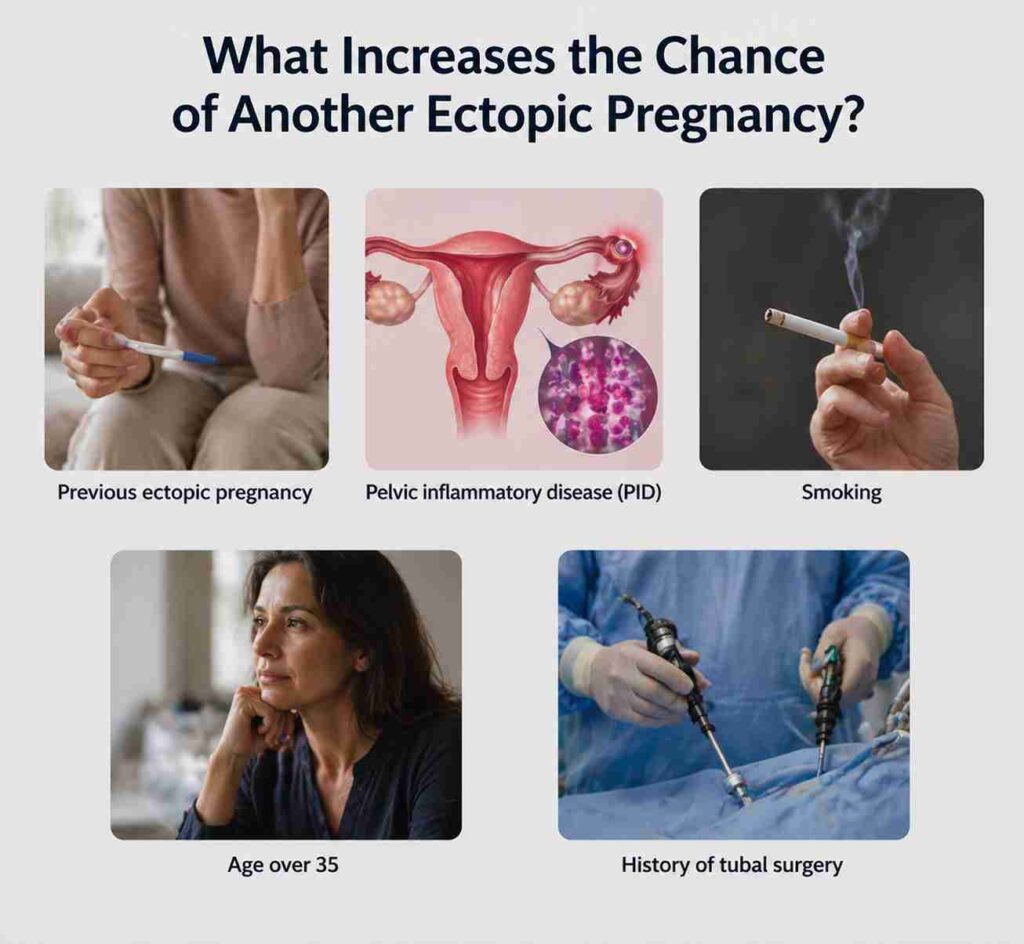
Ectopic pregnancy (EP) affects around 1-2% of all pregnancies and remains a significant global reproductive health issue. (Source)
Certain factors can increase your risk of having another ectopic pregnancy. Let’s know these risk factors in detail.
Previous Ectopic Pregnancy and Its Impact on Future Pregnancies
If you’ve had an ectopic pregnancy, you are at an increased risk of having another one. This is because the fallopian tubes could be damaged or scarred from the previous pregnancy.
Scar tissue can block the path for future pregnancies to travel through the fallopian tubes, making them more likely to implant outside the uterus. This is one of the primary risk factors for ectopic pregnancy.
Risk Factors for Recurrent Ectopic Pregnancy
| Risk Factor | Impact |
| Previous ectopic pregnancy | Higher chance of recurrence |
| Pelvic inflammatory disease (PID) | Causes scarring in the fallopian tubes |
| Smoking | Damages the fallopian tubes and affects fertility |
| Age over 35 | Increased risk of reproductive health issues |
| History of tubal surgery | May cause scarring or blockages in the fallopian tubes |
Pelvic Inflammatory Disease (PID) and Ectopic Pregnancy Risk
Pelvic Inflammatory Disease (PID) plays a major role in increasing the likelihood of an ectopic pregnancy. The scarring and damage caused to the fallopian tubes by PID can elevate the risk of a future ectopic pregnancy by 2 to 10 times in women with a history of the condition.
How to Reduce Your Risk of Another Ectopic Pregnancy
Reducing the risk of another ectopic pregnancy involves making lifestyle changes and following certain precautions. These steps, such as quitting smoking, preventing sexually transmitted infections (STIs), and allowing time for healing before trying to conceive again, can significantly lower the chances of recurrence.
It’s important to remember that if you’ve had one ectopic pregnancy, the risk of another is approximately 7%-10%. Early monitoring during future pregnancies through early pregnancy units is also crucial.
| Prevention Strategy | Description |
| Quit Smoking | Smoking damages the fallopian tubes and is a major risk factor for ectopic pregnancy. |
| Prevent and Treat STIs | STIs like chlamydia and gonorrhoea can lead to Pelvic Inflammatory Disease (PID) and damage the fallopian tubes. Using condoms can reduce the risk. |
| Allow Healing Time | After treatment (e.g., methotrexate or surgery), wait at least 2-3 months or 2-3 menstrual cycles before trying to conceive again. |
| Lifestyle Changes | Maintain a healthy weight to help avoid hormonal imbalances that could affect reproductive health. |
| Early Detection of Future Pregnancies | If pregnant again, contact your doctor for early scans (typically at 6-7 weeks) to confirm the pregnancy is in the uterus. |
| Review Fertility Treatment Plans | If considering IVF, discuss your previous ectopic pregnancy with a specialist to ensure careful monitoring, as IVF carries a higher risk of ectopic pregnancy. |
How Fallopian Tube Damage After Pregnancy Affects Recurrence Risk
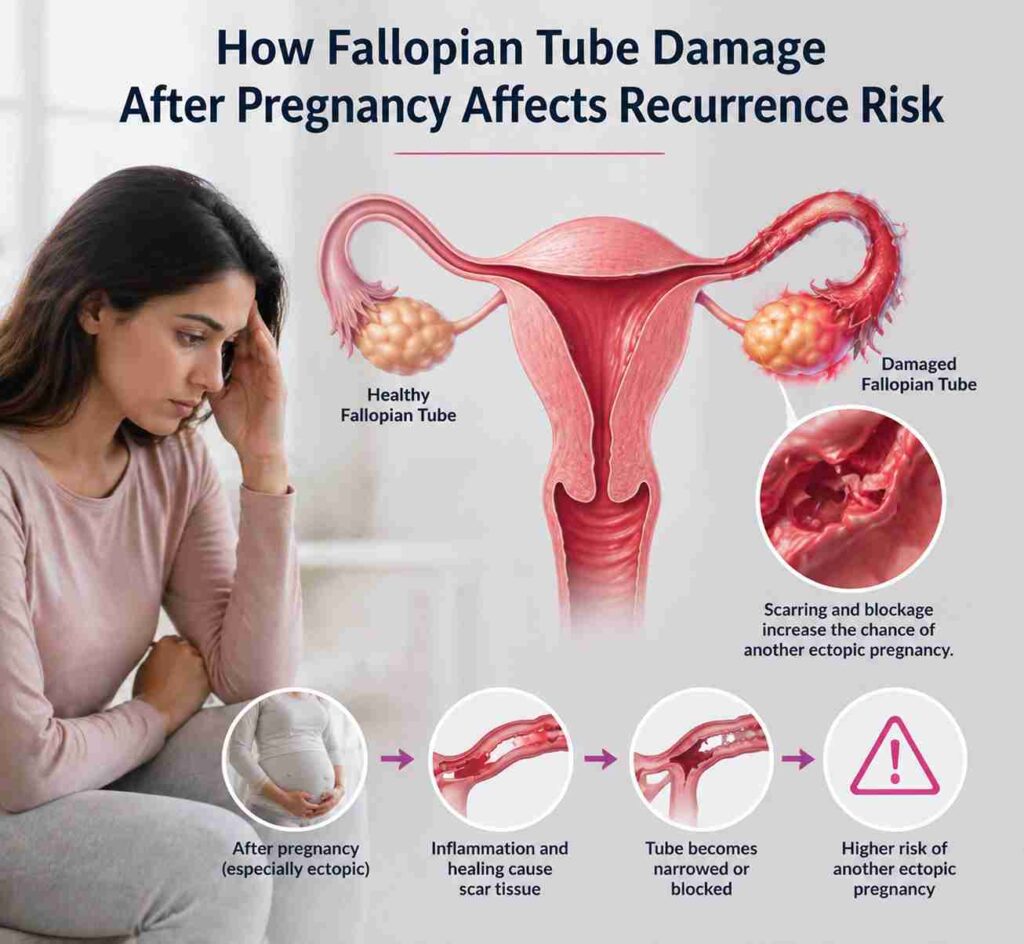
Damage to the fallopian tubes, whether from a previous ectopic pregnancy or a pelvic infection, significantly raises the risk of recurrence. Any scarring or damage to the tubes can obstruct this path, increasing the likelihood that the egg will implant in the fallopian tube or another abnormal location outside the uterus.
The Link Between Fallopian Tube Scarring and Ectopic Pregnancy Recurrence
When the fallopian tubes are damaged, either from a previous ectopic pregnancy, surgery, or an infection, they can become blocked or distorted. This makes it difficult for the fertilised egg to travel to the uterus, which increases the chances of it getting trapped in the tube and causing another ectopic pregnancy.
Factors contributing to fallopian tube damage:
- Previous ectopic pregnancy: The first occurrence often leaves scar tissue in the fallopian tubes.
- Pelvic infections: Conditions such as pelvic inflammatory disease (PID) can cause scarring of the tubes.
- Tubal surgery: Any surgery performed on the fallopian tubes to treat an ectopic pregnancy or other conditions can lead to scarring.
How to Minimise the Risk of Fallopian Tube Damage Post-Pregnancy
If you’ve had an ectopic pregnancy or other conditions that could damage the fallopian tubes, it’s essential to take steps to minimise further damage and reduce the risk of recurrence.
To reduce the risk of recurrence and receive expert care, consult Dr Smita Jadhav, a trusted gynaecology doctor in Salt Lake, Kolkata, for personalised advice and treatment.
The Importance of Timely Diagnosis in Preventing Ectopic Pregnancy Complications
Early diagnosis of an ectopic pregnancy is critical to prevent severe complications, such as rupture and the loss of the fallopian tube. Detecting the condition early enables less invasive treatments, which can safely dissolve the pregnancy tissue without the need for surgery.
Delayed diagnosis increases the risk of serious health issues, including infertility, as it can cause irreversible damage to the fallopian tubes. While the symptoms of an ectopic pregnancy may resemble other conditions, seeking immediate medical attention is essential to ensure a safe and effective treatment plan.
Steps to Safeguard Your Reproductive Health After Ectopic Pregnancy
After an ectopic pregnancy, taking the right steps can significantly improve your chances of a healthy pregnancy in the future. Regular monitoring, lifestyle adjustments, and medical guidance are all important in reducing the risk of recurrence.
If you’re concerned about your risk due to previous pregnancies or conditions, consulting with Dr Smita Jadhav, a trusted gynaecology doctor in Salt Lake, is crucial to ensure the best care for your health.
To schedule an appointment, contact her at +91 97488 25624 today.
People Also Ask
How to prevent a 2nd ectopic pregnancy?
To reduce the risk of a second ectopic pregnancy, it’s essential to allow your body to heal for 3-6 months after the first, treat any underlying infections like STIs or pelvic inflammatory disease (PID), quit smoking, and seek early pregnancy monitoring with blood tests and ultrasound. These steps can help ensure early detection and a healthier pregnancy.
What puts a woman at a high risk of an ectopic pregnancy?
Research suggests that women who undergo IVF or similar fertility treatments may have a higher likelihood of experiencing an ectopic pregnancy. Infertility itself can also increase the risk. Additionally, surgery to correct a closed or damaged fallopian tube can elevate the chances of an ectopic pregnancy.
What is the role of an early pregnancy ultrasound in detecting an ectopic pregnancy?
Early ultrasounds are vital for confirming the location of the pregnancy. If the fertilised egg is in the fallopian tube rather than the uterus, it can be detected early by ultrasound.
What is the most common age for an ectopic pregnancy?
The most common age range for ectopic pregnancy is between 35 and 44 years. Women in this age group are more likely to experience an ectopic pregnancy, especially if they have certain health factors that increase their risk.