

You are in the middle of a meeting, out for a coffee, or just enjoying your evening, and there it is, that nagging itch or a sudden sense of discomfort.
It is a distraction you didn’t ask for, and it’s one thing that is hard to ignore. Vaginal infections don’t just affect your health; they affect your focus.
3 out of 4 women will face this at some point
Under the expert care of Dr Smita Jadhav, we move past the discomfort and the stigma to get you the clear answers and quick relief you deserve.
Let’s dive in and give a clear idea about everything you need to know about t vaginal infections.
What Are Vaginal Infections?
She thought it was just “one of those days.”
A little itching, a slight pain, nothing serious, right? Until her body kept sending signals she couldn’t ignore anymore. This is called vaginal infection, and most of the women tend to ignore it.
A vaginal infection (vaginitis) is an inflammation or infection of the vagina that causes itching, pain, and discharge, often triggered by bacterial, fungal, or viral imbalances.
If these signs feel familiar, consulting an experienced specialist like Dr Smita Jadhav for the right vaginal infection treatment in Kolkata can help you get timely relief and avoid further complications.
Difference Between Vaginal Infection, Vaginitis, and Vaginal Irritation
Most of the women have this common confusion regarding vaginal infection, vaginitis and vaginal irritation. This table will help you get a clear idea.
| Aspect | Vaginal Infection | Vaginitis | Vaginal Irritation |
| Meaning | An actual infection caused by bacteria, fungi, or viruses | A broad medical term for inflammation of the vagina (may or may not include infection) | Mild discomfort or sensitivity without a true infection |
| Cause | Bacterial imbalance, yeast overgrowth, sexually transmitted infections | Can be due to infection, hormonal changes, or allergies | Usually caused by soaps, tight clothing, hygiene products, or friction |
| Symptoms | Itching, burning, unusual discharge, foul smell, pain during urination or intercourse | Itching, discharge, redness, swelling, discomfort | Mild itching, dryness, slight redness or burning sensation |
| Severity | Moderate to severe if untreated | Varies from mild to severe depending on the cause | Usually mild and temporary |
| Treatment Needed | Requires medical treatment (antifungal, antibiotics, etc.) | Depends on cause—may need medication or lifestyle changes | Often improves with simple changes (avoid irritants, better hygiene) |
| Risk if Ignored | Can worsen, spread, or lead to complications | May lead to chronic discomfort or recurrent infections | Usually resolves, but repeated irritation can lead to infections |
Common Types of Vaginal Infections
Not all vaginal infections feel the same, and that is exactly why many women get confused. Understanding the type helps you recognise your symptoms early and choose the right care.
Bacterial Vaginosis (BV)
Think of this as a bacterial imbalance rather than a typical infection.
- Caused by an overgrowth of harmful bacteria in the vagina
- Thin, greyish-white discharge
- Strong fishy odour, especially after intercourse
- Mild itching or burning (sometimes no pain at all)
Vaginal Yeast Infection (Candidiasis)
This is one of the most common and uncomfortable types, and timely vaginal yeast infection treatment in Kolkata fromDr Smita Jadhav can help relieve symptoms and prevent recurrence.
Know about it:
- Caused by the overgrowth of Candida (a type of fungus)
- Thick, white, cottage cheese-like discharge
- Intense itching and irritation
- Redness and swelling around the vaginal area
- Burning sensation during urination or intercourse
Trichomoniasis
A sexually transmitted infection (STI) that often goes unnoticed.
- Caused by a parasite (Trichomonas vaginalis)
- Frothy, yellow-green discharge
- Strong, unpleasant odour
- Pain during urination or intercourse
- Itching and inflammation
Non-Infectious Vaginitis
(Irritant, Allergic, Atrophic, Inflammatory)
Not every discomfort is due to an infection; sometimes, it’s your body reacting to something external or hormonal changes.
- Caused by soaps, perfumes, tight clothing, or hygiene products
- Can also occur due to low estrogen (during perimenopause and postmenopause)
- Symptoms include dryness, mild itching, redness, or burning
- Usually, no unusual discharge or strong odour
- Improves once the irritant is removed or with proper care
What Causes Vaginal Infections?
The feeling of itching and pain keeps coming back, I don’t understand why,” she said.
Did anything change recently, new products, medications, stress levels? Her doctor asked.
“Well, I was on antibiotics last week, and I did switch to a new intimate wash.”
Most vaginal infections don’t just happen randomly; there is usually a trigger behind them, whether it is an internal imbalance or an external factor affecting your body.
It is important to know the causes of vaginal infection:
Bacterial Imbalance
Your vagina naturally has “good bacteria”(Lactobacillus) that keep everything balanced. When this balance is disturbed by stress, poor hygiene, or even lifestyle changes, harmful bacteria begin to grow.
Fungal Overgrowth
A small amount of yeast is always present in the body, but when it grows too much, it causes infection. It often happens when the body’s natural balance is disrupted.
Sexually Transmitted Infections
Some infections are passed through unprotected sexual contact. These may cause symptoms like itching, burning, pain during urination, or unusual discharge.
Hormonal Changes and Menopause
Hormones play a big role in vaginal health. During pregnancy, periods, or menopause, hormone levels fluctuate, which can cause dryness, irritation, or increase the risk of infections. Lower estrogen levels, especially after menopause, can weaken natural protection.
Antibiotic Use, Diabetes, Pregnancy, and Low Immunity
Certain conditions make your body more prone to infections. Antibiotics can kill both good and bad bacteria. High blood sugar in diabetes, hormonal shifts in pregnancy, or a weak immune system.
Scented Products, Douching, and Other Irritants
Using scented soaps, sprays, or douching products can actually do more harm than good. They disturb the natural pH and irritate the sensitive skin. Even tight clothing or harsh detergents can sometimes trigger discomfort or infection.
Symptoms of Vaginal Infection
What may seem like a small discomfort can actually be your body’s way of signalling an underlying infection.
Abnormal Vaginal Discharge
- Change in colour (white, yellow, green, grey)
- Thick or watery texture
- More than usual discharge
Vaginal Itching and Burning
- Constant irritation in the vaginal area
- Burning sensation, especially after urination
Fishy Odour or Bad Smell
- Strong smell, especially after intercourse
- Common in bacterial infections
Pain During Urination or Intercourse
- Burning while passing urine
- Discomfort or pain during intercourse
Redness, Swelling, or Irritation
- External skin may look red or inflamed
- Feeling of soreness or tenderness
If you are noticing these symptoms, consulting Dr Smita Jadhav, the best gynaecology doctor in Kolkata, can help you.
Vaginal Infection Symptoms by Type
The symptoms you experience can vary depending on the type of infection causing it.
BV Symptoms (Bacterial Vaginosis)
- Thin grey/white discharge
- Strong fishy smell
- Mild itching or no itching
Yeast Infection Symptoms
- Thick, white “curd-like” discharge
- Intense itching
- Redness and swelling
Trichomoniasis Symptoms
- Yellow-green frothy discharge
- Foul smell
- Pain during urination or sex
How to Tell the Difference (BV vs Yeast)
- BV: Smell is strong, discharge is thin
- Yeast: No strong smell, discharge thick and itching
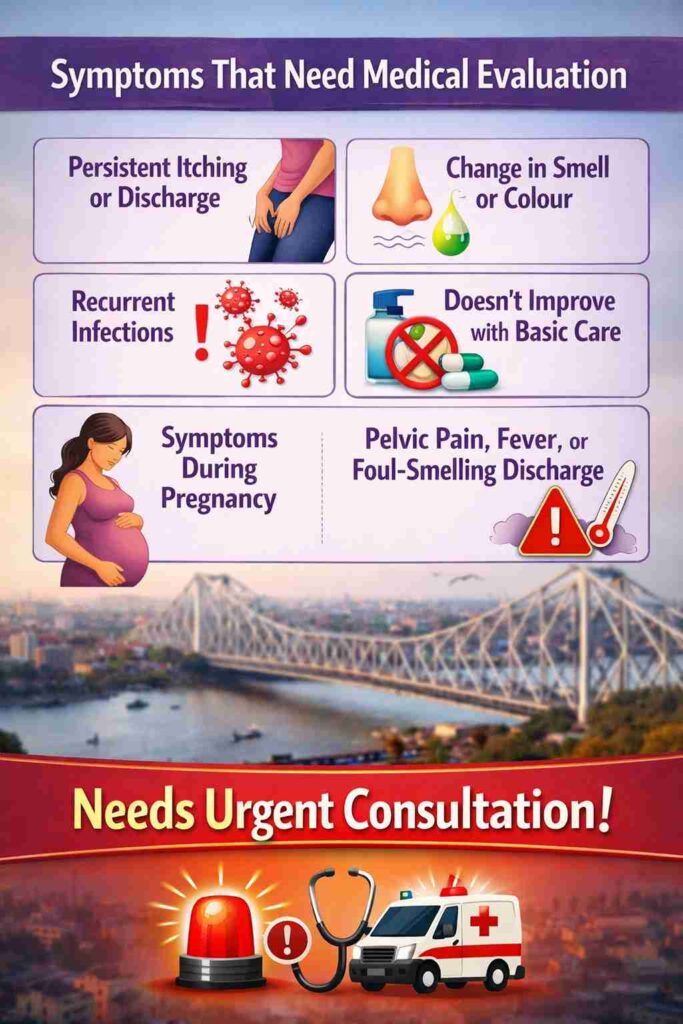
When to See a Gynaecologist for a Vaginal Infection
Sometimes home care isn’t enough, and your body needs medical attention to prevent the problem from worsening.
How Vaginal Infections Are Diagnosed
Suffering from vaginal infections, know how it can be diagnosed :
- Medical History and Pelvic Examination
- Vaginal pH Testing
- Microscopy, Swab Test, and Lab Testing
Treatment for Vaginal Infections
- Antibiotics (BV & Trichomoniasis)
- Antifungal Medicines (Yeast Infection)
- Treatment for Non-Infectious Vaginitis
- Partner Treatment in Selected Cases
Home Care and Prevention Tips
- Avoid Douching and Scented Products
- Wear Breathable Cotton Underwear
- Safe Sexual Practices
- Managing Diabetes and Triggers
When Surgery Is Needed for a Vaginal Infection
Most vaginal infections are mild and can be completely treated with medicines, so surgery is usually not required.
Pelvic Abscess or Collection
If pus collects inside the pelvis due to a severe infection, it may need to be drained to prevent complications.
Failure of Medical Treatment
When infections do not respond to medicines or become severe, further intervention may be needed.
Laparoscopic or Image-Guided Drainage
In complex cases, doctors use minimally invasive procedures to safely remove infected fluid or pus.
Used in Complex Cases
These procedures are only considered when the infection has progressed or cannot be managed with routine treatment.
Complications of Untreated Vaginal Infections
- Recurrent Infection
- Spread to the Pelvis
- Pregnancy-Related Concerns
- Impact on Daily Life
Take Control of Your Intimate Health
Vaginal infections are common, but ignoring them can lead to recurring discomfort and complications. From understanding symptoms to choosing the right treatment, early action makes all the difference. The key is not to self-diagnose but to identify the exact cause and treat it properly. With the right care, most infections are easily manageable and preventable.
If you are experiencing symptoms or have concerns, consult Dr Smita Jadhav, the best gynaecology doctor in Kolkata, for an accurate diagnosis and personalised treatment.
Call at +91 97488 25624 today.
People Also Ask
What is the most common cause of vaginal infection?
The most common cause is a bacterial imbalance, known as bacterial vaginosis (BV). It happens when harmful bacteria overgrow and disturb the natural balance of the vagina.
How do I know if I have BV or a yeast infection?
BV usually causes thin, fishy-smelling discharge, while a yeast infection causes thick, white discharge with intense itching.
If you notice a strong odour, seeking the right fishy vaginal odour treatment in Kolkata can help ensure accurate diagnosis and effective relief.
Can vaginal infection cause pelvic pain?
Mild infections usually don’t cause pelvic pain, but if the infection spreads, it can lead to deeper pain in the lower abdomen. This needs medical attention.
Do vaginal infections need surgery?
Most vaginal infections are treated with medicines and do not need surgery. Surgery is only required in rare and severe cases where complications develop.
Can I treat a vaginal infection at home?
Basic care, like hygiene and avoiding irritants, may help mild symptoms, but proper treatment depends on the cause. Self-treatment without diagnosis can sometimes make it worse.
When should I see a gynaecologist in Kolkata?
You should consult a gynaecologist if symptoms persist, keep coming back, or worsen over time. Early consultation helps in faster relief and prevents complications.