

Did you know PCOS affects 10–13% of women worldwide, yet most remain undiagnosed?
Most of the women nowadays suffer from irregular periods, weight gain, and fatigue, yet they choose to ignore it and brush it off.
Polycystic Ovary Syndrome (PCOS) affects millions of women, disrupting hormones, confidence, and daily life.
This blog will guide you through PCOS, its symptoms, and effective management strategies. With the right knowledge and care, women can overcome challenges and live life on their terms.
What does PCOS mean?
PCOS (Polycystic Ovary Syndrome) is a common hormonal and metabolic condition that affects women of reproductive age. It develops when the ovaries produce higher-than-normal levels of male hormones, known as androgens.
It leads to:
- Irregular periods,
- Ovarian cysts and
- Difficulties with ovulation
With expert guidance from Dr Smita Jadhav, a trusted gynecology doctor in Salt Lake, women can manage PCOS effectively and achieve better health outcomes.
10 Practical Ways to Manage PCOS Better
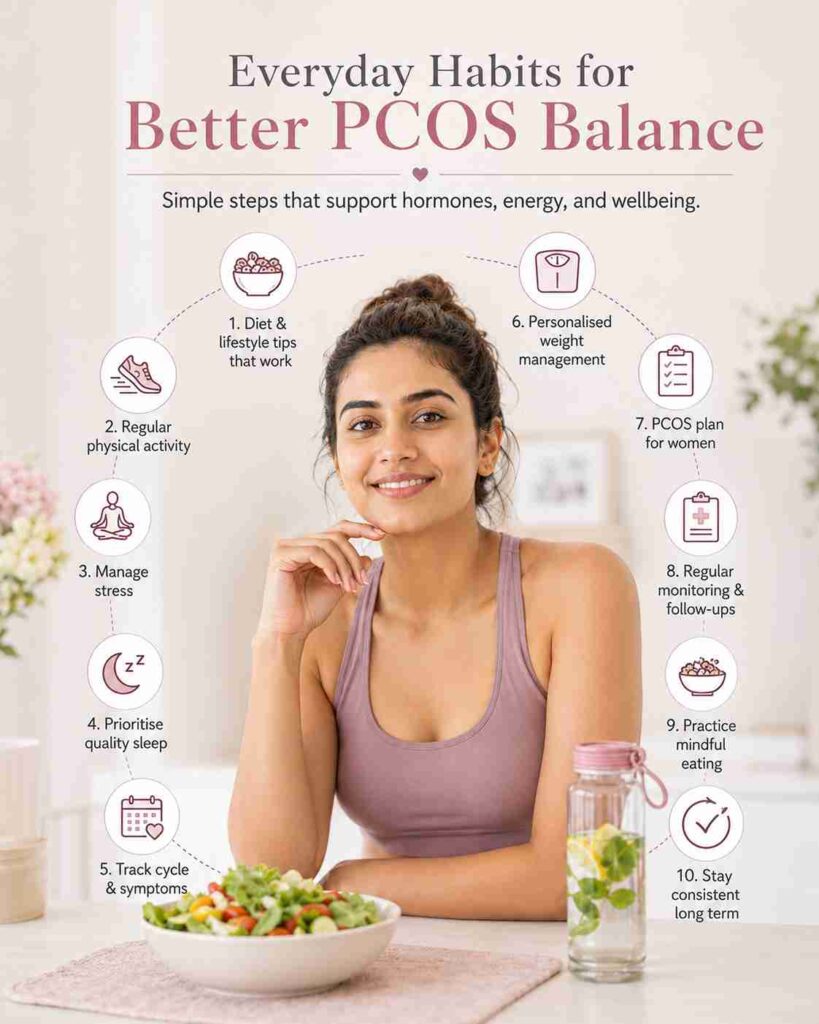
Managing PCOS effectively requires a holistic approach that addresses diet, exercise, stress, hormonal balance, and regular monitoring.
Here are 10 practical, actionable tips to help women with PCOS take control of their health and improve symptoms.
1. Adopt PCOS Diet and Lifestyle Tips That Work
A balanced diet is a cornerstone of PCOS management. Focus on low glycemic index (GI) foods to help regulate blood sugar and insulin levels. Include:
- Whole grains such as oats, quinoa, and brown rice.
- High-fiber vegetables and fruits to improve digestion and satiety.
- Lean proteins like chicken, fish, tofu, and legumes.
- Avoid processed and sugary foods, which spike insulin and worsen weight gain.
Tips for practical eating:
- Pair protein with carbohydrates at each meal to reduce insulin spikes.
- Stay hydrated and avoid sugary drinks.
| Food Category | Examples | Benefits for PCOS |
| Whole grains | Oats, quinoa, brown rice, millets. | Low GI stabilises blood sugar |
| Vegetables & fruits | Broccoli, berries, leafy greens | High fiber reduces insulin spikes |
| Lean proteins | Chicken, tofu, fish, lentils | Supports metabolism and hormone balance. Give satiety. |
2. Regular Physical Activity for Hormonal Balance
Exercise improves insulin sensitivity, supports weight management, and enhances hormonal balance.
Effective routines include:
- Walking: 30 minutes daily improves metabolism and circulation, especially after meals.
- Strength training: Build lean muscle mass and burn fat efficiently.
- Stress-reducing activities: Yoga, Pilates, or stretching help lower cortisol levels.
Exercise tips for PCOS:
Consistency is more important than intensity; regular movement matters more than occasional extreme workouts.
- It should be a balance of a mix of steady-state cardio to lower insulin resistance
- Resistance training to build metabolism-boosting lean muscle,
- Low-impact yoga or Pilates to reduce cortisol and balance hormones
3. Manage Stress to Improve Hormonal Health
Stress reduction improves hormonal balance, reduces bloating, and can even improve menstrual regularity.
Practical stress management strategies:
- Mind-body practices like meditation or deep-breathing exercises
- Journaling to track emotional triggers
- Hobbies that promote relaxation, such as reading, painting, or music
4. Track Your Cycle and Symptoms
Monitoring your menstrual cycle and symptoms helps in the early detection of menstrual irregularities and guides treatment decisions.
Ways to track:
- Use mobile apps designed for PCOS or fertility.
- Maintain a journal noting cycles, mood changes, acne flare-ups, and energy levels.
Benefits:
- Helps identify patterns in hormonal fluctuations.
- Assists your doctor in personalising treatment.
- Encourages awareness of triggers for weight gain or acne.
5. Prioritise Quality Sleep
Sleep plays a critical role in managing PCOS, as it directly affects hormones, insulin sensitivity, and weight control. Poor sleep can worsen insulin resistance, increase cortisol (stress hormone), and make weight management more difficult.
Tips for better sleep:
- Aim for 7–9 hours of uninterrupted sleep.
- Keep a consistent sleep schedule, even on weekends.
- Avoid screens and caffeine before bedtime.
Impact on PCOS:
- Improves insulin sensitivity, helping with weight management.
- Reduces cortisol and stabilises hormone levels.
- Supports overall energy and mood, making lifestyle adherence easier.
6 . Personalised Weight Management Strategies
Women with PCOS benefit most from a personalised approach to weight management. A personalised plan targeting insulin control, hormone balance, and metabolism is essential. Losing 5–10% of your body weight can significantly improve menstrual regularity and fertility.
| Strategy | Recommendation | Benefit |
| Nutrition | Low GI, high fiber, protein-rich meals | Stabilizes blood sugar |
| Fitness | Mix of cardio + strength training | Burns fat, builds muscle |
| Monitoring | Track weight & waistline monthly | Observe progress and adjust plan |
Actionable strategies:
- Consult a nutritionist for a PCOS-friendly meal plan.
- Work with a fitness expert to design exercises suited to your body type.
- Focus on small, sustainable changes rather than crash diets.
7. PCOS Management Plan for Women
Every woman’s PCOS journey is different, and bio-individual approaches are crucial. A personalised approach helps you take control of your health and daily life.
- Discuss genetics, symptoms, and lifestyle with your healthcare provider.
- Use hormonal tests, ultrasound, and lab results to guide interventions.
- Create a personalised plan combining diet, exercise, evidence-based supplements, and medical care.
- Focus on long-term goals like regulating menstrual cycles, supporting fertility, and improving weight and energy levels.
8. Regular Monitoring & Follow-Ups
Ongoing monitoring helps track progress and detect complications early. Keeping an eye on your cycles, weight, and symptoms ensures your PCOS management stays on track.
Recommendations:
- Lab tests: Blood sugar, insulin, androgen levels, lipid profile.
- Ultrasound monitoring: Track ovarian cysts and follicle development.
- Schedule regular follow-ups with your endocrinologist or gynecologist.
9. Practice Mindful Eating
Mindful eating helps control cravings, overeating, and blood sugar spikes, all crucial for PCOS.
Tips:
- Eat slowly, focusing on each bite
- Avoid distractions like phones or TV during meals
- Include balanced meals with protein, fiber, and healthy fats
- Stop when you feel satisfied
10. Stay Consistent with Long-Term Lifestyle Habits
Small daily habits add up for PCOS management. Consistency with healthy routines supports hormones, weight, and overall energy.
Steps to follow:
- Maintain regular exercise, including cardio, strength, and stress-reducing practices
- Stick to a balanced, low-GI diet
- Prioritise sleep and stress management
- Track cycles and symptoms to notice patterns
Let’s Recap
Managing PCOS is all about consistency and personalised care. Small daily changes in diet, exercise, sleep, and stress management can transform your health, regulate cycles, and improve weight and energy. Every woman’s journey is different, so expert guidance can make all the difference.
Ready to manage PCOS with confidence? Reach out to Dr Smita Jadhav, a leading gynecology doctor in Salt Lake.
Call +91 97488 25624 to book your appointment today.
People Also Ask
- How does PCOS affect hormonal balance in women?
PCOS increases male hormone (androgen) levels, disrupting ovulation and menstrual cycles. This hormonal imbalance can also affect weight, skin, and hair health over time.
- What lifestyle changes help manage PCOS naturally?
A balanced diet, regular exercise, stress management, and quality sleep can improve insulin sensitivity, regulate hormones, and support a healthy weight in women with PCOS.
- How does insulin resistance contribute to weight gain in PCOS?
Insulin resistance leads the body to store more fat, particularly around the abdomen. It also worsens hormonal imbalance, making weight management challenging even with diet and exercise.
- Why is tracking menstrual cycles important for PCOS?
Monitoring cycles and symptoms using apps or journals helps women identify patterns, recognise hormonal fluctuations, and make informed lifestyle adjustments for better management.
- Can PCOS cause fertility issues?
Yes, irregular ovulation caused by a hormonal imbalance in PCOS can make conceiving more difficult. Early management and lifestyle changes can improve fertility naturally.